
How Scotland Lives On in Canada Today
Overview
Canada has more people claiming Scottish ancestry than some small nations have citizens. That's not an exaggeration, it's census data. And it shows up in ways you can actually see and hear, from bagpipes at small town festivals to Gaelic street signs on Cape Breton Island. At MacKinnon Watches, we spend a lot of time thinking about how people carry Scottish identity with them, wherever they've ended up. Canada might be the best example of that anywhere in the world.
Key Takeaways
-
Over 4.3 million people in Canada reported Scottish ancestry in the most recent census, making it one of the country's largest ethnic groups
-
Nova Scotia, meaning "New Scotland," was named for a reason, and Cape Breton Island still has small pockets of Gaelic speakers today
-
Some of the biggest Highland Games outside Scotland happen in Canada, including the Fergus Scottish Festival in Ontario
-
Canadian provinces have their own official tartans, alongside clan and family tartans still worn with pride
-
Scottish immigrants shaped Canadian banking, education, and the fur trade in ways that still matter today
-
Many Scottish Canadians are generations removed from Scotland but stay connected through tartan, festivals, and ancestry research
Why So Many Scots Made Canada Home
Ask a Scottish Canadian how their family ended up in Canada and you'll usually get a version of the same story. Somewhere back a few generations, a great-great-grandparent left the Highlands, often not entirely by choice.
The Highland Clearances and What Came After
Between the mid 1700s and the mid 1800s, waves of Scots left the Highlands and Islands during a period known as the Highland Clearances, when landowners cleared tenant farmers off the land to make way for large scale sheep farming. Many had little choice but to emigrate. Canada, with its open land and British colonial ties, became one of the main destinations.
Nova Scotia absorbed a huge share of that migration. The name itself is Latin for "New Scotland," and it wasn't chosen lightly. Settlers arriving in the late 1700s found rocky coastlines, cool wet weather, and hills that weren't so different from the Highlands they'd left behind. For homesick Gaels, that similarity mattered. It gave them something familiar to build a life around.
Prince Edward Island and parts of Ontario saw major Scottish settlement too, but Nova Scotia and Cape Breton in particular became the beating heart of Scottish Canada. In some counties, Scottish ancestry is still the single largest group reported, decades after the last wave of settlers arrived.

Where Gaelic Still Lives: Cape Breton Island
Here's something a lot of people don't know. Scotland itself has struggled to keep Scottish Gaelic alive, yet one of the strongest surviving pockets of the language is in Canada, not Scotland.
Cape Breton Island became a genuine Gaelic speaking community from the 1770s onward, and in some areas Gaelic remained the everyday language well into the 20th century. Numbers have dropped a lot since the language's peak. According to Nova Scotia's Office of Gaelic Affairs, roughly 2,000 people in the province still speak Gaelic today, down from tens of thousands a century ago. That's a steep decline, but it hasn't disappeared.
What's happening now is a genuine revival, not just nostalgia. Schools across northeastern Nova Scotia and Cape Breton teach Gaelic as part of the curriculum, community immersion programs run in a dozen or so towns, and institutions like the Gaelic College in Cape Breton keep the language connected to music, dance, and storytelling rather than treating it as a museum piece. So while Gaelic is fragile, it isn't gone. Not even close.
Scottish Place Names You'll Recognise
Drive across Canada and you'll bump into Scotland constantly, just under a different sky. Glencoe, Ontario. Inverness, Nova Scotia. Perth, Ontario. Dundee, New Brunswick. Lochaber, Nova Scotia.
Homesick settlers named their new towns after the places they'd left, partly out of sentiment and partly to make an unfamiliar landscape feel a bit less foreign. It worked. These names have stuck for well over a century, and most residents today have no direct Scottish ancestry at all, they've just inherited towns with Scottish names baked into the map.
Highland Games in Canada: Bigger Than You'd Think
Here's a fact that surprises most people: some of the largest Highland Games outside Scotland don't happen in Scotland at all. They happen in Canada.
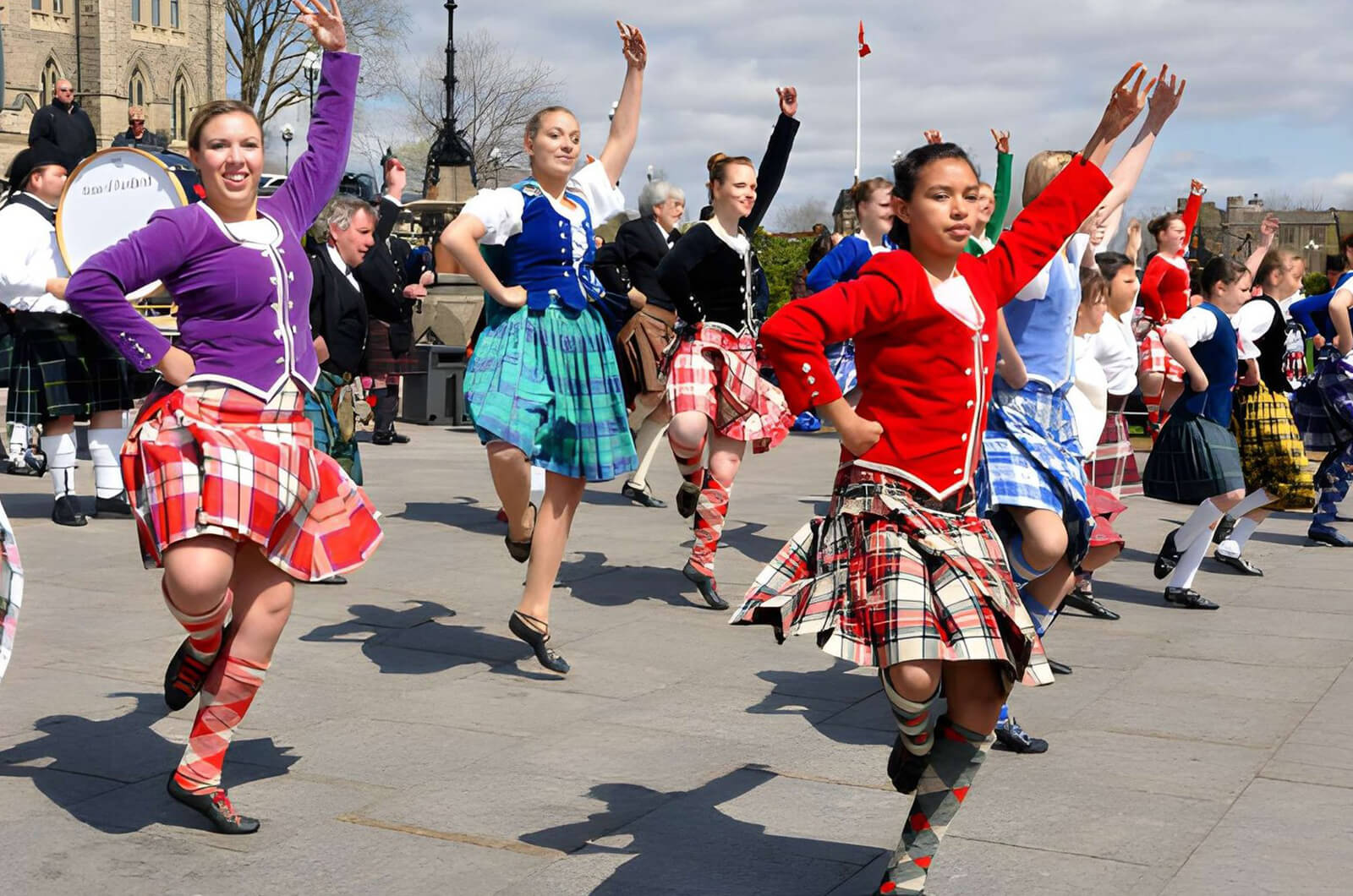
The Fergus Scottish Festival and Highland Games in Ontario has been running since 1946 and now draws crowds over multiple days for heavy events, pipe band competitions, Highland dancing, and dozens of clan tents. It's not a small local fair. Competitors travel from across North America to take part, and the festival's own history traces its growth from a single day event to one of the continent's most established Scottish gatherings.
Fergus isn't alone either. Highland Games run in cities and small towns right across Canada throughout the summer, each one a mix of athletic competition, whisky tasting, genealogy tents, and live piping. For a lot of Scottish Canadians, these festivals are the one weekend a year they lean fully into their heritage. Wearing the family tartan, tracking down a clan tent, maybe even entering the caber toss if they're feeling brave.
Canadian Tartans: A Uniquely Canadian Tradition
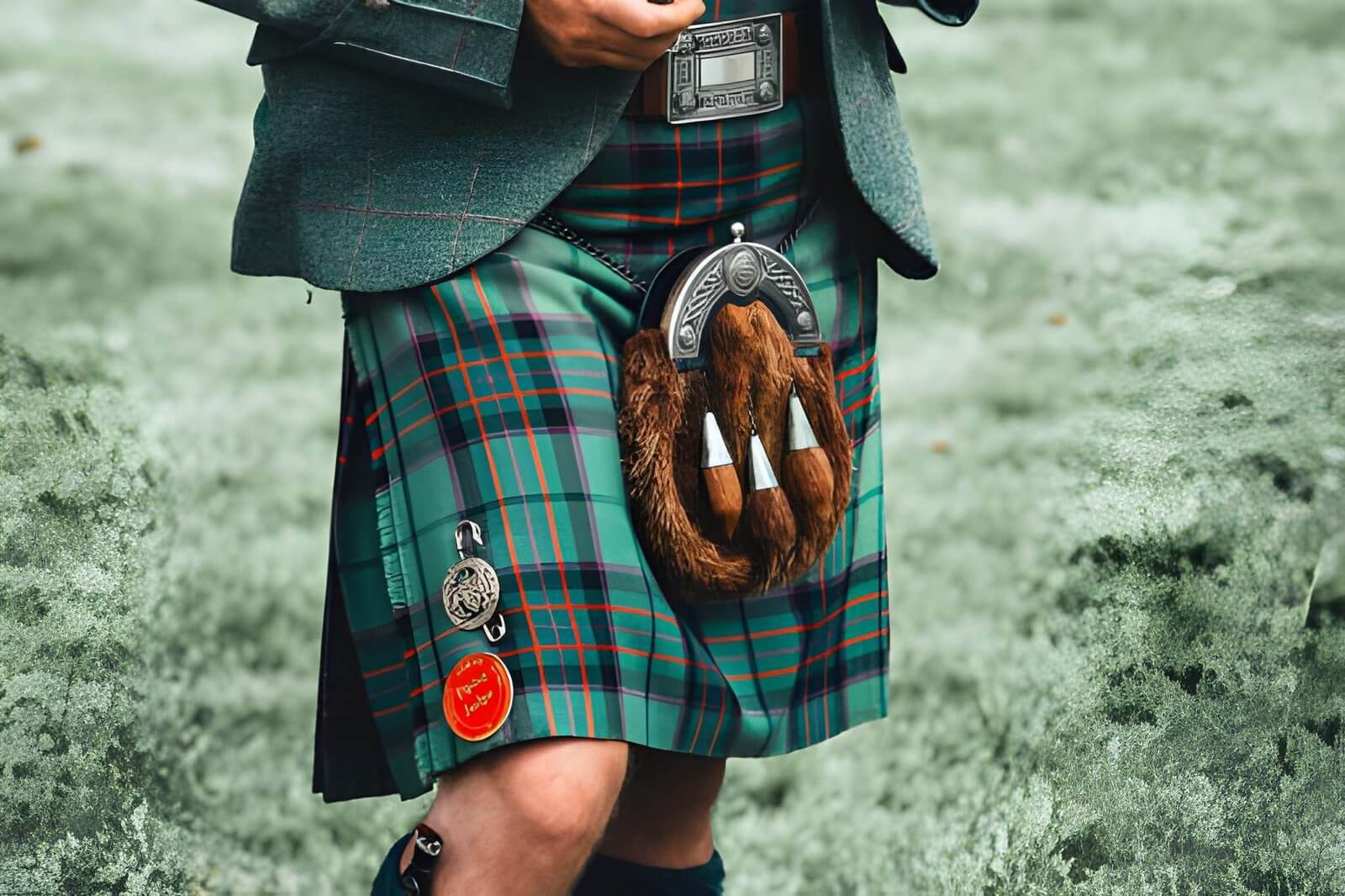
This is where things get interesting, because Canada didn't just import Scottish tartan, it built its own tradition around it. Provinces including Nova Scotia, Ontario, British Columbia, and Alberta each have their own official provincial tartans, registered and recognised the same way a clan tartan would be back in Scotland. That's rare. Very few countries outside Scotland treat tartan as a genuine part of regional identity, and Canada is arguably the best example anywhere.
Family and clan tartans matter just as much here as they do in the Highlands, if not more, since so many Scottish Canadians are several generations removed and use tartan as a direct, wearable link back to a place they've maybe never even visited. Add to that university tartans, military tartans, and commemorative designs marking historic anniversaries, and you get a tartan culture that's every bit as layered as Scotland's own.
This is exactly the kind of connection we care about at MacKinnon Watches. If you're curious whether your clan tartan, or a provincial tartan like Nova Scotia's, is available, our Tartan Finder lets you search by name or colour across our full range. Every strap we make uses authentic tartan sourced from Scottish mills that have woven these patterns for generations, so whichever one you choose, it's the real thing rather than a printed copy.
Whether it's a family tartan tied to a specific clan or a provincial one representing where your family actually settled in Canada, a custom tartan watch turns that pattern into something you can wear every day rather than just bring out for Highland Games season.
Scottish Influence Runs Deeper Than Culture
Scots didn't just bring festivals and fabric to Canada. They helped build some of the country's core institutions.
Banking is a big one. Several of Canada's early and most influential banks were founded or heavily shaped by Scottish immigrants, and that influence carried through into how Canadian finance developed more broadly. Education followed a similar pattern. Scottish settlers placed a huge value on schooling, and that showed up in the universities and colleges established across the Maritimes and Ontario throughout the 1800s.
Then there's the fur trade. The Hudson's Bay Company, one of the oldest companies in North America, was staffed and led in large part by Scots, many of whom pushed deep into the Canadian interior and intermarried with Indigenous communities along the way. Engineering and railway building told a similar story, with Scottish engineers playing a major role in connecting the country coast to coast.
None of this gets talked about as often as the Highland Games or the tartan. But it's arguably just as important to understanding how deeply Scotland is woven into Canada's foundations.

Music, Clans, and Carrying It Forward
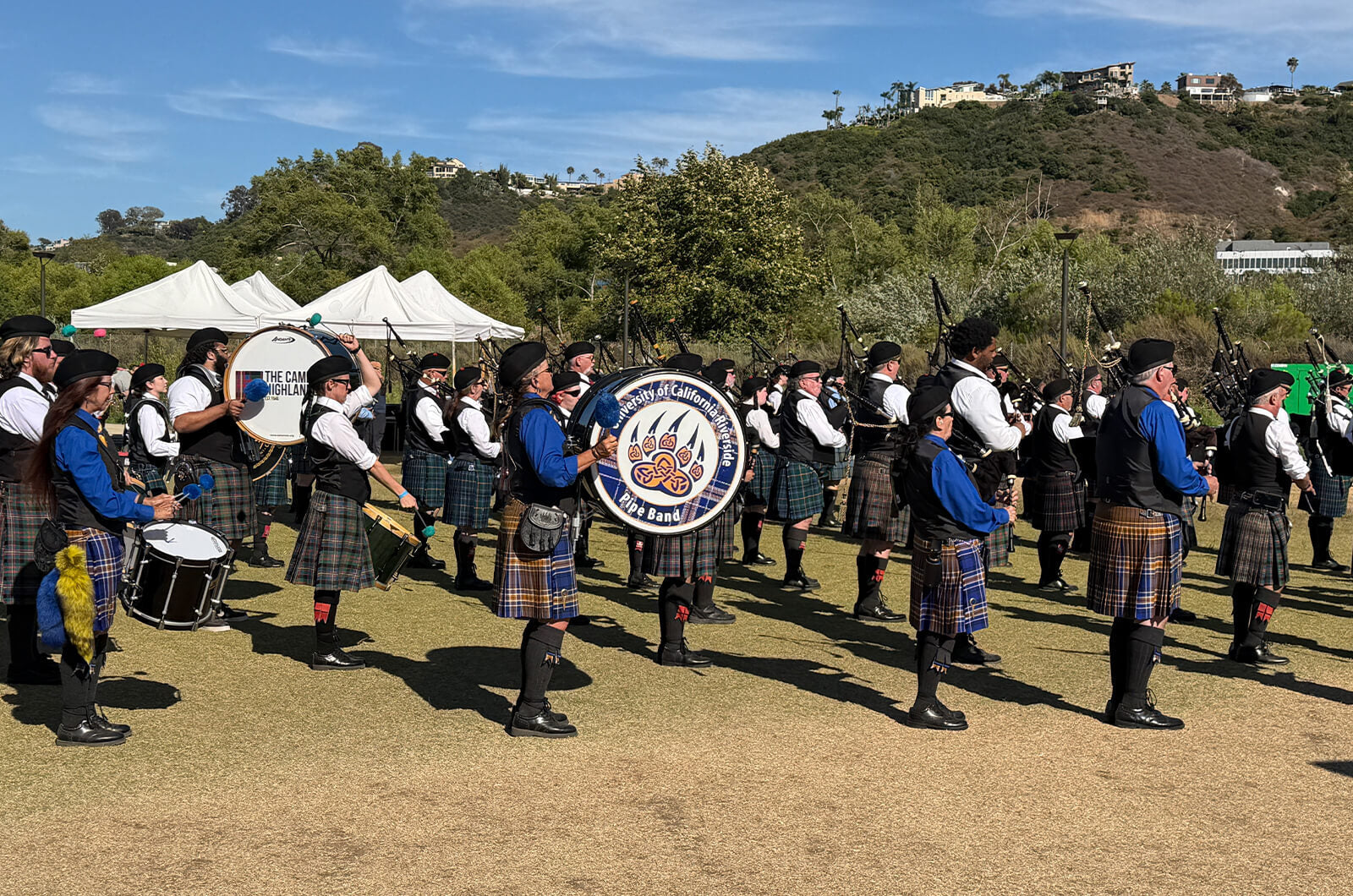
Pipe bands remain hugely popular across Canada, and Cape Breton fiddle traditions have actually preserved playing styles that have faded in parts of Scotland itself. Ceilidhs and Celtic festivals keep that musical thread alive well beyond the Highland Games season.
Clan societies stay remarkably active too, organising gatherings, supporting genealogy research, and in many cases helping members plan trips back to ancestral Scotland. For someone who's never set foot in the Highlands, tracing a family tartan or attending a clan gathering can feel like the closest thing to going home.
That emotional pull is really what this whole story comes down to. Many Scottish Canadians are three, four, even five generations removed from anyone who actually lived in Scotland. And yet they still wear the tartan. They still show up to the games. They still dig through old records looking for a name that connects them back. Scotland doesn't have to be close by to still matter. We built our own story on a similar idea, if you want the full version, you can read more about MacKinnon Watches and where our own family roots come from.
Wear Your Own Piece of the Story
If any of this struck a chord, whether it's a family name, a province your ancestors settled in, or just a love of tartan, we'd genuinely love to help you find the pattern that fits. Get in touch and we'll help you track down the right tartan for your story.
Get in touch with MacKinnon Watches
Frequently Asked Questions
How many Canadians have Scottish ancestry?
According to the 2021 Census of Population, roughly 4.39 million people in Canada reported Scottish ancestry, either as their sole origin or in combination with others. That makes Scottish one of the largest reported ethnic origins in the country.
Why is Nova Scotia called "New Scotland"?
Nova Scotia is Latin for "New Scotland." Early Scottish settlers, particularly from the late 1700s onward, found the landscape and climate reminiscent of the Highlands, and the name reflected both the settlers' origins and their hope of building a familiar life in a new country.
Is Gaelic still spoken in Canada?
Yes, though in much smaller numbers than in the past. Nova Scotia's Office of Gaelic Affairs estimates around 2,000 Gaelic speakers remain in the province today, concentrated mainly in Cape Breton Island and parts of the northeastern mainland.
Where are the biggest Highland Games in Canada?
The Fergus Scottish Festival and Highland Games in Ontario is one of the largest and longest running, held annually since 1946. Highland Games also take place in numerous other Canadian cities and towns throughout the summer months.
Do Canadian provinces have their own tartans?
Yes. Several provinces, including Nova Scotia, Ontario, British Columbia, and Alberta, have official registered tartans, alongside the family and clan tartans worn by Scottish Canadians more broadly.
What's the difference between a clan tartan and a provincial tartan?
A clan tartan is tied to a specific Scottish family name and history, while a provincial tartan represents a Canadian region rather than a bloodline. Many Scottish Canadians wear both, depending on the occasion.
Can I get a custom tartan watch with a Canadian provincial tartan?
It depends on availability within our current range. Our Tartan Finder lets you search by name, so you can check whether your provincial or clan tartan is currently available, and our team can help if you're not sure where to start.

Written by Matthew Murphy




Leave a comment
This site is protected by hCaptcha and the hCaptcha Privacy Policy and Terms of Service apply.