
What Is the National Tartan of Scotland? A Clear Guide
Key Takeaways
-
Scotland doesn't have one single "official" national tartan in the way a country might have an official flag, but Flower of Scotland is the pattern most widely recognised as the national tartan.
-
Flower of Scotland was created to honour Roy Williamson, who wrote Scotland's national song of the same name, and it isn't tied to any clan.
-
The Scottish Register of Tartans, run by National Records of Scotland, is the official body that records and registers tartan designs.
-
Clan tartans are different from national tartans. Clan tartans link to a specific family name, while a national tartan is meant to be worn by anyone with a connection to Scotland.
-
There's no legal requirement that ties a person to a specific tartan. You're free to wear whichever pattern speaks to you, whether that's a national design, a clan tartan, or something custom.
-
At MacKinnon Watches, we work with authentic Scottish tartan sourced from Scottish mills, which means we can build a strap around a national tartan, a clan tartan, or a design that's personal to you.
Here's a question we get a lot from customers browsing our tartan collection: is there actually an official tartan for Scotland? It's a fair question, and the answer is a bit more layered than you'd expect.
We're MacKinnon Watches, and we spend our days working directly with Scottish tartan, sourcing it, matching it, and turning it into wearable pieces. So we figured it was worth setting the record straight on what "national tartan" actually means, where the idea comes from, and how it's different from the clan tartans most people have heard of.
Is There an Official National Tartan of Scotland?
Not in the strict legal sense, no. Scotland doesn't have a government-designated "this is the one true tartan" the way a country might designate a national flower or bird. What Scotland does have is a tartan that's become the de facto national symbol through popular use: Flower of Scotland.
Sound surprising? It shouldn't. Tartan has never really worked through top-down decree. It grew out of regional weaving traditions, then family associations, then a much broader sense of Scottish identity. A single "official" pattern was never really how the system was built.
That said, the closest thing to an authority on the matter is the Scottish Register of Tartans, maintained by National Records of Scotland. It's a government database that catalogues thousands of registered tartans, including their threadcounts, designers, and registration notes. If you want to check whether a tartan is genuine and properly documented, this is where you'd look.
Why Flower of Scotland Is Treated as the National Tartan
Flower of Scotland gets its name from the song, not the other way round. The tartan was designed to honour Roy Williamson of the folk group The Corries, who wrote both the words and the music for "Flower of Scotland," a song that's now widely accepted as Scotland's national anthem for sporting events.
A few things make this design stand apart from a typical clan tartan.
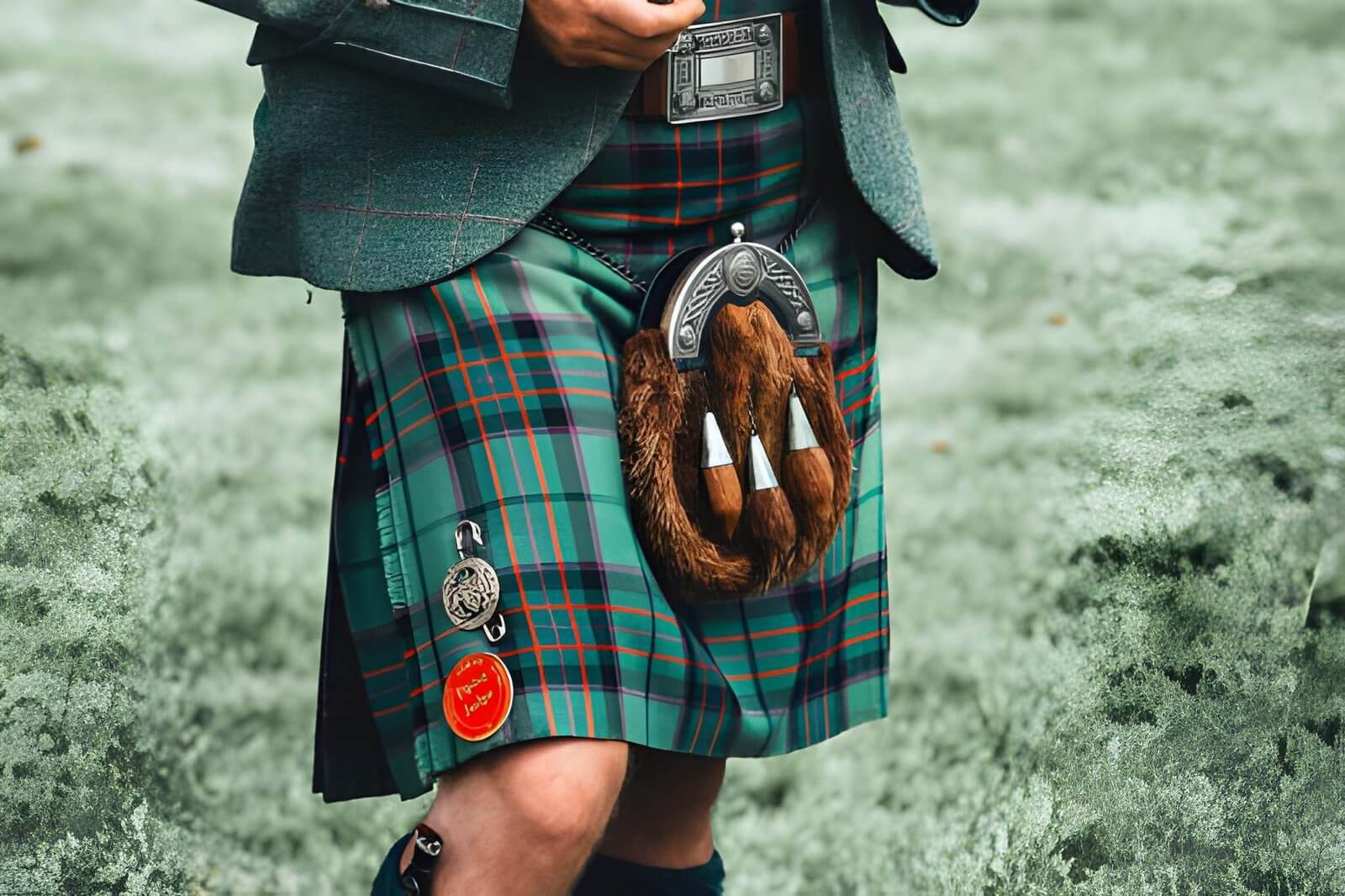
It carries no clan affiliation whatsoever. The pattern is based on the setting and threadcount of the Gunn tartan (which Williamson himself wore), using traditional colours described as Lichen Green and Lochan Blue. Because it has no family tie, it's available for absolutely anyone to wear, regardless of surname or ancestry.
That's actually the whole point. A clan tartan tells the world "I belong to this family." A national tartan tells the world "I'm Scottish, or I feel connected to Scotland," full stop, no genealogy required.
National Tartan vs Clan Tartan: What's the Real Difference?
This is where a lot of the confusion comes from, so let's separate the two properly.
Clan tartans are tied to a specific family name. Traditionally, these designs signalled kinship and loyalty to a particular clan or chief. Today, thousands of surnames have an associated tartan registered in the official database, and many families take real pride in wearing "their" pattern at weddings, Highland games, or Burns Night.
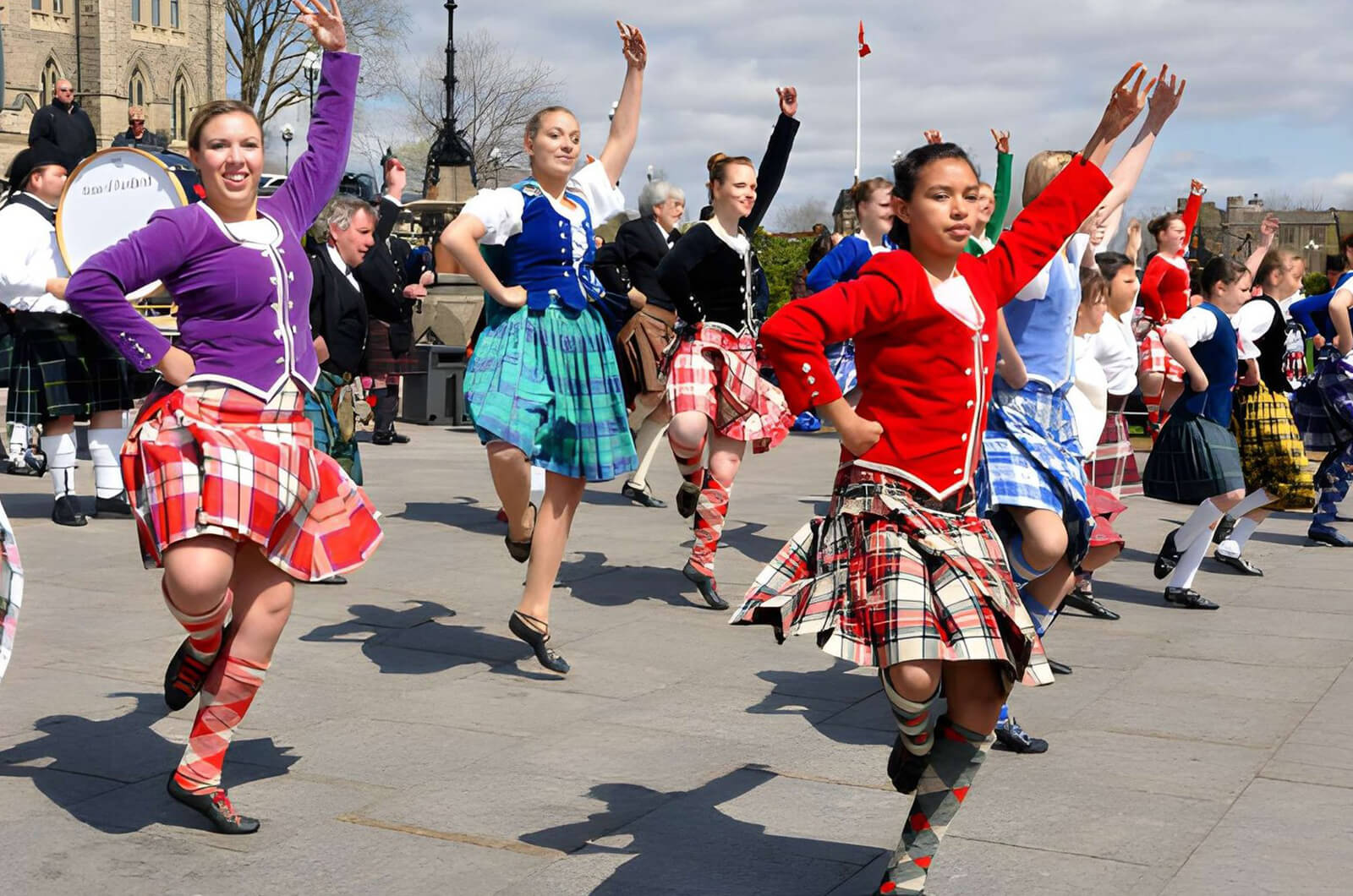
National tartans, on the other hand, aren't linked to any bloodline. They exist to represent Scotland as a whole, which is why they've become popular at national sporting events. You'll spot Flower of Scotland (and similar universal tartans) worn by football and rugby fans who have no clan connection at all but want to show support for the country.
There's also a third category worth knowing: district tartans, tied to a region rather than a family, and corporate or commemorative tartans, registered for organisations, universities, or specific occasions. Our own Scotland National Team collection draws on this national identity angle, built for supporters rather than clan members.
How Tartans Get Registered (and Why That Matters)
Here's something most articles on this topic skip over entirely: the actual registration process, and why it matters for authenticity.
Since 2009, the Scottish Register of Tartans has been the official channel for recording new tartan designs. Under the Scottish Register of Tartans Act, a new design must meet the legal definition of tartan, be genuinely unique to the Register, and have a clear link between the applicant and the proposed tartan name. Anyone submitting a new design pays a registration fee, and once approved, the tartan is permanently preserved alongside Scotland's national archives.
This matters because it means tartan isn't just decorative fabric with a nice story attached. Each registered design has documentation: a threadcount, a designer, a date, and often a written explanation of what it represents. When we talk about "authentic" tartan at MacKinnon Watches, this is part of what we mean. Genuine tartans trace back to real mills and real records, not a printed approximation.
We should say plainly: we're not a government body and we don't register tartans ourselves. What we do is source directly from Scottish mills that weave tartan the traditional way, which lets us offer patterns with a genuine provenance rather than a generic plaid.
Choosing a Tartan That Actually Means Something to You
So where does that leave you if you're trying to pick a tartan for yourself?
Start with your surname. If you've got Scottish ancestry, a clan tartan search is usually the first move, and there are far more registered names than most people expect.
If there's no clan match, or you'd simply rather not tie yourself to one family, a national or universal tartan like Flower of Scotland is a completely legitimate choice. Nobody's going to question it. There's also nothing stopping you from choosing a tartan purely because you like how it looks, plenty of Scots do exactly that.
For a lot of our customers, the appeal isn't really about strict heritage rules. It's about having something with genuine roots that still feels personal. That's part of why we built our custom tartan watch, which lets you choose from over 1,000 authentic tartans, whether that's a national design, a clan pattern, or something tied to a university or region. If you're not sure where to start, our tartan finder tool lets you search by colour or name to narrow things down.
One more practical note: if a tartan you want isn't listed on our site, we may still be able to source it. We've got access to thousands more patterns than what's shown on the page, so it's worth asking.
Wearing National Tartan Beyond the Kilt
Kilts get most of the attention, understandably. But national tartan shows up in plenty of other places too: scarves, ties, sashes, and increasingly, in accessories people wear every day rather than just on formal occasions.
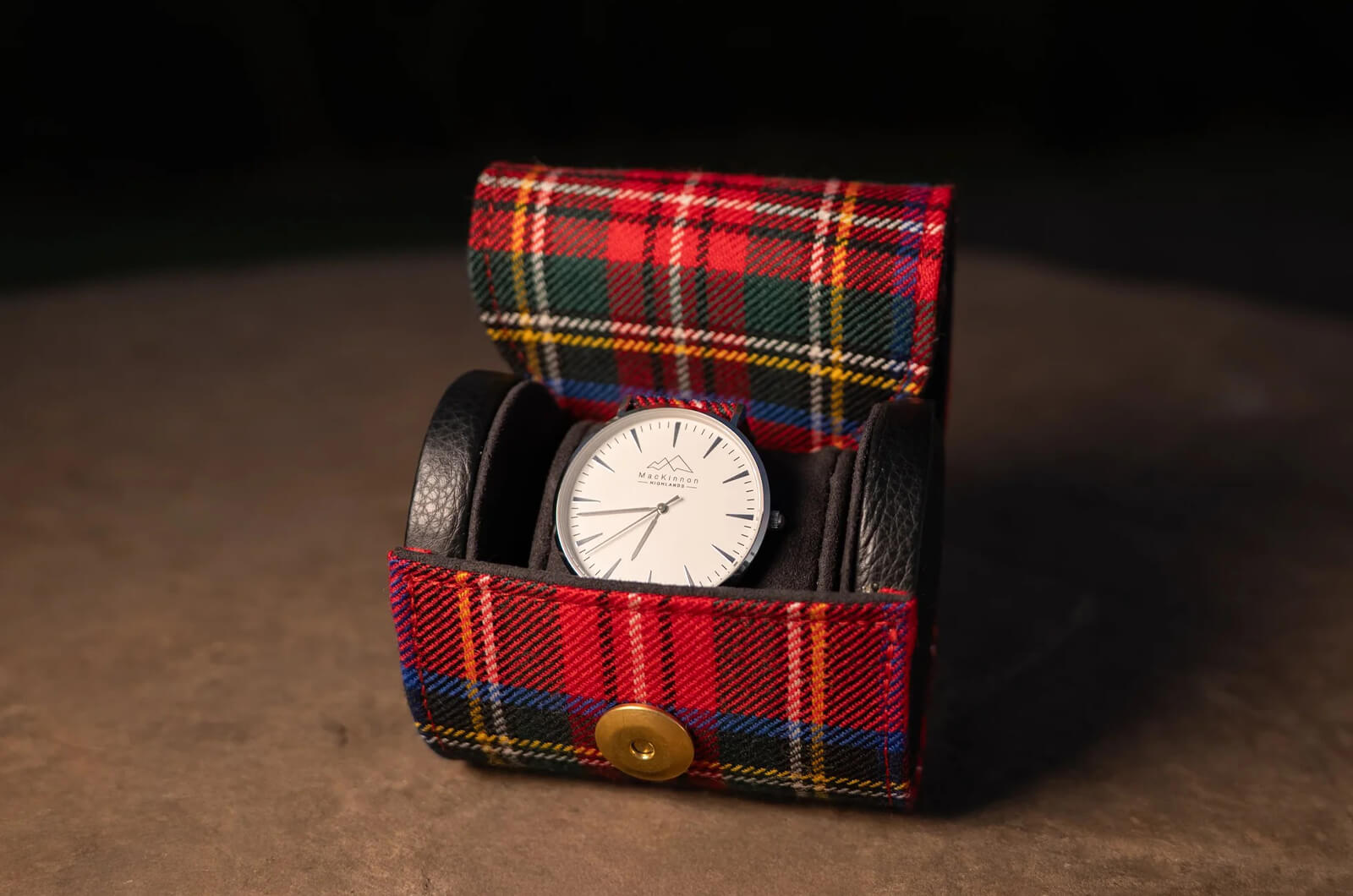
That's really where we come in. A kilt is a big commitment, cost-wise and occasion-wise. A tartan watch strap isn't. It's a quieter way to carry a connection to Scotland without needing a wedding or a Highland games to justify it. Every strap we make uses genuine tartan woven in Scottish mills, and our Classic Collection is a good starting point if you want to see how a national tartan looks against different watch case finishes.
We've built our whole workshop around this idea: heritage doesn't need to be locked away for special occasions. It can sit on your wrist on an ordinary Tuesday.
A Quick Note on Getting It Right
If accuracy matters to you (and for a national symbol, it probably should), stick to documented sources. The Scottish Register of Tartans is the government body responsible for this, and it's freely searchable if you want to verify a specific pattern's history, designer, or threadcount before you commit to it.
We'd also gently push back on any site that claims there's a single legally mandated "national tartan of Scotland" with no caveats. As we've covered here, the reality is a bit more nuanced. Flower of Scotland holds that position through widespread recognition and its ties to the national song, not through legislation.
Ready to Find Your Tartan?
Whether you're after a national design, a clan pattern tied to your family name, or something entirely custom, our team can help you find and build something genuine. Get in touch with us and we'll talk you through your options, tartan availability, and turnaround times.
FAQ
Does Scotland have an official national tartan by law?
No. There's no legislation designating a single official national tartan. Flower of Scotland is the pattern most commonly treated as the national tartan because of its ties to Scotland's national song and its lack of any clan affiliation, but it holds that status through convention rather than law.
What is the Flower of Scotland tartan based on?
It's based on the setting and threadcount of the Gunn tartan, using the colours Lichen Green and Lochan Blue. It was created to honour Roy Williamson, who wrote "Flower of Scotland."
Can anyone wear the Flower of Scotland tartan?
Yes. It has no clan or family affiliation, so it's available for anyone to wear regardless of surname or ancestry.
What's the difference between a national tartan and a clan tartan?
A clan tartan is linked to a specific family surname and traditionally signalled loyalty to that clan. A national tartan, like Flower of Scotland, represents Scotland as a whole and carries no family tie.
Where can I check if a tartan is genuine or officially registered?
The Scottish Register of Tartans, run by National Records of Scotland, is the official database. You can search it directly to check a tartan's designer, threadcount, and registration date.
Do I need to prove Scottish ancestry to wear a tartan?
Not at all. There's no requirement tying tartan-wearing to proven ancestry. Many people wear a national or universal tartan simply because they feel a connection to Scotland, and clan tartans are generally open to anyone who identifies with that family name too.
How many tartans are there in total?
The Scottish Register of Tartans has absorbed records from earlier registries and now holds thousands of documented designs, with new tartans added regularly. MacKinnon Watches works with over 1,000 of these directly, with access to source many more on request.

Written by Matthew Murphy




Leave a comment
This site is protected by hCaptcha and the hCaptcha Privacy Policy and Terms of Service apply.