
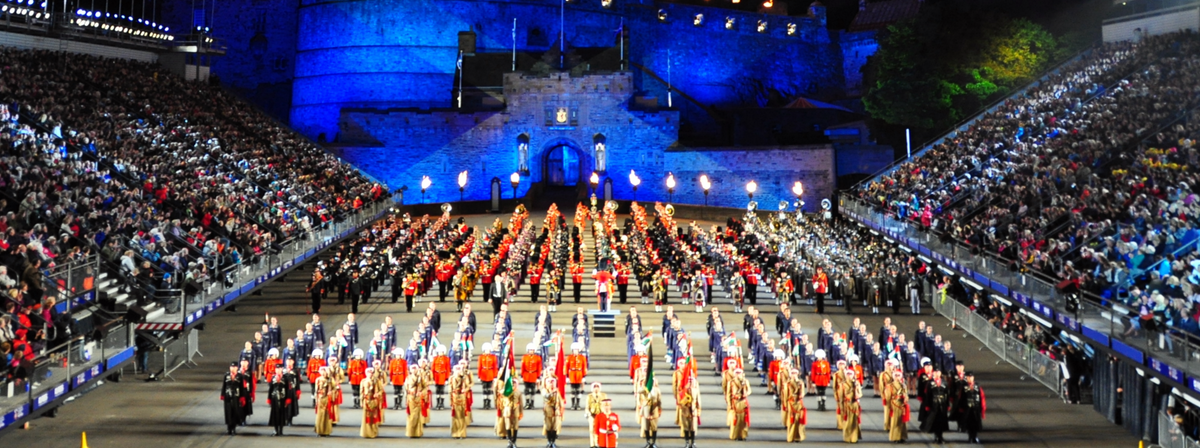
What Is the Royal Edinburgh Military Tattoo?
Key Takeaways
- The Royal Edinburgh Military Tattoo began in 1950 on the Edinburgh Castle Esplanade and grew from a single show into one of Scotland's biggest annual events.
- The word "tattoo" comes from a 17th century Dutch phrase, doe den tap toe, used to call soldiers back to barracks at night.
- Queen Elizabeth II granted the event Royal status in 2010, and it's been the Royal Edinburgh Military Tattoo ever since.
- The show now brings together pipers, drummers, dancers, and military bands from dozens of countries, all performing against the floodlit backdrop of the Castle.
- The Tattoo runs every August and draws visitors from across the UK, the US, Canada, and beyond, many of whom come specifically to connect with Scottish heritage.

Introduction
If you've ever seen footage of a floodlit castle with pipers marching out of its gates, chances are you've seen the Royal Edinburgh Military Tattoo. It's one of those events that looks almost too dramatic to be real. And yet it happens every single August, right on schedule, on the esplanade of Edinburgh Castle.
We get asked about the Tattoo a fair amount, mostly from customers planning a trip to Scotland who want to know what all the fuss is about. So we thought it was worth writing this properly. Here's where it came from, how it grew into what it is today, and why it still means so much to people with Scottish roots, whether they live in Edinburgh or on the other side of the world.
Where the Tattoo Actually Started
The story goes back further than most people think. In 1949, a modest production called "Something About a Soldier" was performed at the Ross Bandstand in Princes Street Gardens. It wasn't the Tattoo yet, not officially, but it planted the seed.
That same year, Lieutenant Colonel George Malcolm staged a second production on the Castle Esplanade itself, called "The King's Men," in front of a standing audience of 2,500. The Lord Provost of Edinburgh liked what he saw enough to ask the Army in Scotland to put on an annual military show. They agreed. And so, informally at first, a tradition was born.
The first official Edinburgh Tattoo followed in 1950. Eight items made up the programme. Over its run of twenty performances, it pulled in an audience of 100,000, which was no small feat for a new event with no track record behind it. Fireworks were used for the first time that year too, a tradition that's stuck around ever since.
The Meaning Behind the Name
Here's a question we get a lot: why call it a "Tattoo" at all? It has nothing to do with ink on skin.
The name actually comes from a 17th century Dutch phrase, doe den tap toe, which roughly translates to "turn off the tap." According to VisitScotland, it was originally a nightly signal telling innkeepers to stop serving soldiers so they'd head back to barracks. Over time, that signal evolved into a ceremonial performance of music and drill, which is exactly what you see on the Esplanade today.
Not exactly what most people guess. But once you know it, the name makes a lot more sense.
How the Show Grew Decade by Decade
What started as a local military display has turned into something genuinely international. By the 1950s, overseas performers were already joining in, with bands from Canada, France, and the Netherlands appearing on the programme. The 1960s and 70s brought acts from Turkey, the United States, Norway, and beyond, each adding their own flavour to the show.
Some of the additions over the years are just plain fun. In 1972, His Majesty's Guard of Norway adopted a penguin at Edinburgh Zoo as their mascot, naming him Nils Olav. He's been promoted every time the Guard visits Edinburgh, and he now holds the rank of Major General. Try finding that detail in a typical event brochure.
The Tattoo hit a major milestone in 2010, when Queen Elizabeth II granted it Royal status. That's when it officially became The Royal Edinburgh Military Tattoo, the name it still carries.
Sellouts became the norm too. Since 1998, according to Wikipedia's account of the event, the Tattoo has sold out every year it's run, aside from the pandemic cancellations in 2020 and 2021.
What You'll See at the Show Today
So what does the modern Tattoo actually look like? Roughly a thousand performers take part each year, made up of pipers, drummers, dancers, singers, and full military bands. The show has a lead service each year (a specific branch of the armed forces given top billing), plus international guest acts that change annually depending on the year's theme.
The Massed Pipes and Drums remain the heart of it. When they march out through the Castle gates in formation, it's the moment most people remember long after the show ends.
There's real production value behind it now too. Lighting design, projection mapping onto the Castle walls, choreography, all coordinated to a scale you wouldn't expect from an event that started with eight simple acts.
Why Edinburgh Castle Makes This Work
You could stage a military tattoo almost anywhere. So why does this one always come back to the same castle esplanade?
Part of it is pure visual drama. A thousand year old fortress lit up against the night sky isn't something you can fake with a stadium backdrop. Edinburgh Castle itself has hosted the Tattoo since the very beginning, and the setting has become inseparable from the event's identity. Try picturing the Tattoo anywhere else. It just doesn't work the same way.
There's also the practical side. The Esplanade sits right in the middle of Edinburgh's festival season, which means visitors already in the city for other events can easily add the Tattoo to their trip.
Why This Matters Beyond the Show Itself
Here's the part that doesn't get covered enough in most write ups on this topic: for a lot of people, the Tattoo isn't just entertainment. It's a touchpoint for identity.
We hear this constantly from our own customers, many of whom are part of the Scottish diaspora in the US, Canada, and Australia. They didn't grow up in Scotland, but they still feel a pull toward it. Watching massed pipers march out of Edinburgh Castle, hearing the drums, seeing tartan everywhere in the crowd, it's one of the clearest ways to feel connected to that heritage, even from thousands of miles away.
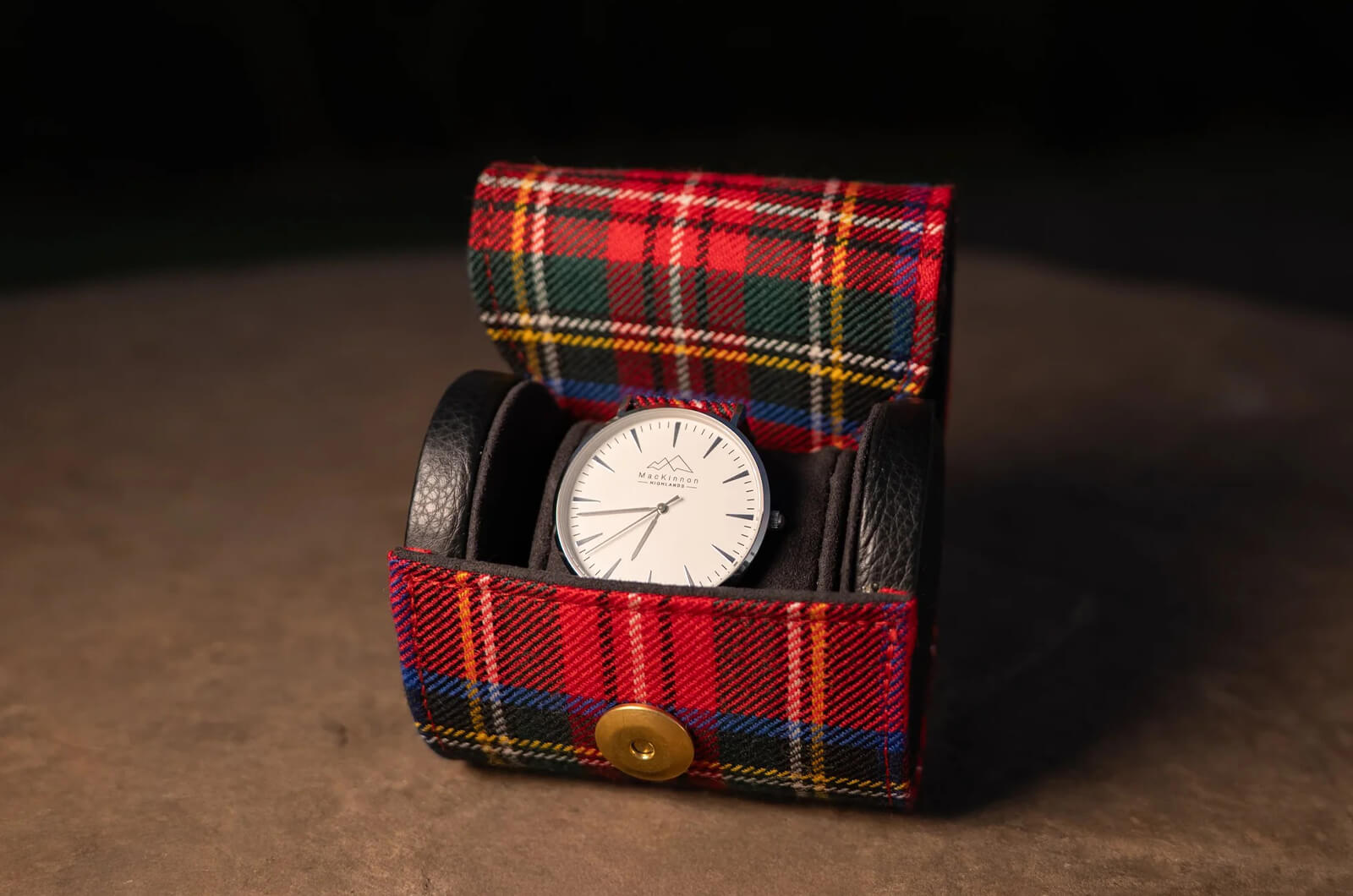
That's honestly a big part of why we do what we do. Every custom tartan watch we make uses tartan sourced directly from Scottish mills, the same kind of craftsmanship tradition that runs through events like the Tattoo. It's a small, wearable way to carry that connection with you, whether you're watching the show live on the Esplanade or following along from your living room.
If you want the full picture of how we approach that, our story and heritage page goes into more detail about where we started and why tartan sits at the centre of everything we make.
Planning a Visit Around the Tattoo
If you're thinking about seeing it in person, a few things are worth knowing. The show runs every August, and tickets typically go fast given the sellout streak we mentioned earlier. Seating is outdoors on the Esplanade, so it's worth checking the weather and dressing for it, even in summer. Edinburgh evenings can turn chilly quicker than you'd expect.
Because the Tattoo lines up with the wider Edinburgh Festival season, hotels and flights get booked out early too. If you're planning a trip specifically to catch the show, sooner is better than later.
Bring the Story Home With You
Seeing the Tattoo in person is one thing. Wanting to hold onto that feeling once you're back home is another. If a trip to Edinburgh Castle is on your radar, or if you're simply drawn to what the event represents, the official Tattoo site is the best place to start.
See the Royal Edinburgh Military Tattoo
Whether you're planning your first visit or your fifth, the full programme, ticket information, and show dates are available directly through The Royal Edinburgh Military Tattoo.
FAQ
When did the Royal Edinburgh Military Tattoo start?
The first official Tattoo took place in 1950 on the Edinburgh Castle Esplanade, following a smaller trial production the year before. It has run nearly every year since, aside from cancellations during the COVID pandemic.
Why is it called a "Tattoo"?
The name comes from a Dutch phrase, doe den tap toe, once used to signal soldiers back to their barracks at night. The word stuck, and it's now used for this style of military music and drill performance worldwide.
Where does the Royal Edinburgh Military Tattoo take place?
It's held on the Esplanade of Edinburgh Castle, the open area in front of the Castle's main gates, every August.
How do I get tickets for the Royal Edinburgh Military Tattoo?
Tickets are sold directly through the official Tattoo website. Given the event's long sellout streak, booking early is generally a good idea if specific dates or seating matter to you.
Why does the event have "Royal" in its name?
Queen Elizabeth II granted the Tattoo Royal status in 2010, which is when it officially became The Royal Edinburgh Military Tattoo.
Is the Tattoo only military bands?
Not anymore. While military bands and pipers remain central, the modern show also includes dancers, singers, international guest performers, and elaborate lighting and projection design.
What's the best time to visit Edinburgh for the Tattoo?
The show runs throughout August, overlapping with Edinburgh's wider festival season. Booking accommodation and tickets well in advance is worth it, since both tend to sell out.

Written by Matthew Murphy


Leave a comment
This site is protected by hCaptcha and the hCaptcha Privacy Policy and Terms of Service apply.