
Best National Trust for Scotland Castles to Visit
Key Takeaways
- The National Trust for Scotland cares for some of the country's finest castles, ranging from fairytale tower houses to cliff-top showpieces.
- Each castle carries a distinct history, from Jacobite connections and royal retreats to Eisenhower's holiday flat and Disney-worthy pink walls.
- Aberdeenshire's castle trail is Scotland's only dedicated route, covering 14 remarkable fortresses in one region.
- Visiting these places isn't just tourism. For many, it's a way of reconnecting with clan history, family roots, and a sense of where you come from.
- If you're planning a trip, free entry is available with NTS membership, which pays for itself quickly if you're visiting more than one or two properties.
Scotland does castles differently. There's no shortage of dramatic ruins elsewhere in Britain, but what Scotland has that nowhere else quite matches is this combination of genuine clan history, jaw-dropping landscapes, and stories that feel personal. People don't visit Drum Castle or Craigievar the way they'd visit a theme park. They go because their family name might be carved into the stone somewhere. Or because a great-great-grandparent once stood on that same hillside. Or simply because the Highlands have a way of pulling you back.
We think about this a lot at MacKinnon Watches. Our brand was born in the Highlands, rooted in the same sense of identity and heritage that draws people to Scotland's castles in the first place. So when we put together this guide to the best National Trust for Scotland castles, it isn't a list of pretty buildings. It's our attempt to point you towards the places that actually feel like Scotland.
What Is the National Trust for Scotland?
The National Trust for Scotland (NTS) is a conservation charity that cares for over 100 remarkable places across the country, covering roughly 76,000 hectares of land. That includes everything from mountain ranges and coastal paths to historic houses, gardens, and, of course, castles. Membership gives free entry to all NTS properties, which makes it worth considering if you're planning any kind of heritage visit.
Crucially, the NTS doesn't just maintain these places, it actively tells their stories. For anyone with Scottish roots, that can make a visit genuinely emotional rather than just scenic.
Craigievar Castle
This is the one that stops people in their tracks.
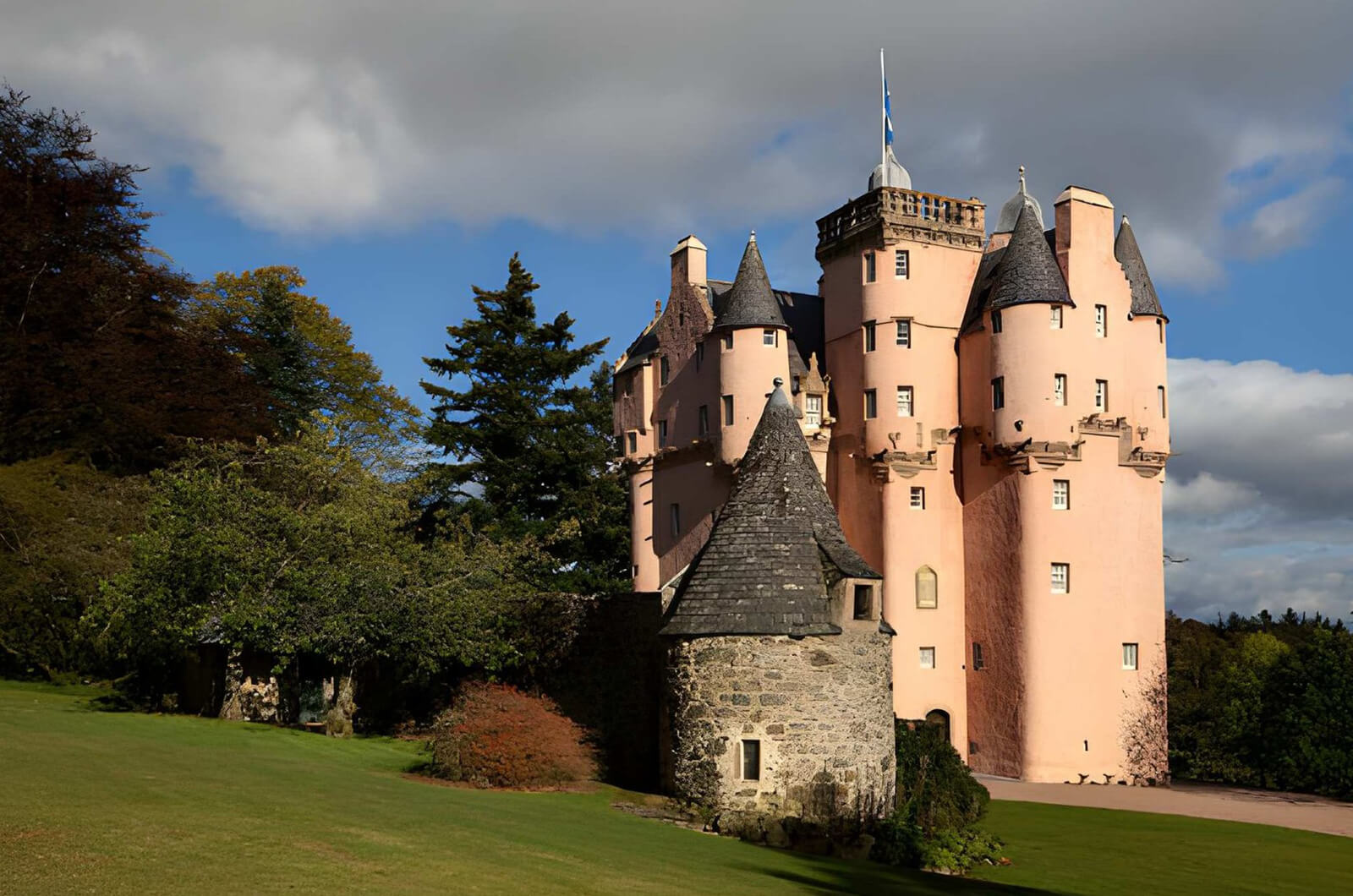
Craigievar is a pink tower house in Aberdeenshire, and it earns every bit of the attention it gets. Construction started around 1576 and the exterior has barely changed since around 1626, which is staggering when you see it in person. The vibrant pink exterior was actually restored in recent years, returning it to the famous "Craigievar Pink" colour introduced in 1824 by Sir John Forbes. There's a rumour, widely repeated, that it inspired Disney's Cinderella castle. Whether or not that's true, you can see why people say it.
What most articles about Craigievar don't mention is the level of detail inside. In 2019, a volunteer discovered a heavy studded oak door in one of the castle's outbuildings, believed to be the original front door and possibly the oldest in NTS care. That kind of discovery is what makes these places feel alive rather than preserved.
If you're visiting Aberdeenshire, Craigievar sits within reach of the Aberdeenshire Castle Trail, which covers 14 remarkable fortresses and is the only dedicated castle trail in Scotland.
Culzean Castle
Perched on the Ayrshire cliffs above the Firth of Clyde, Culzean is Robert Adam's masterwork. It was designed for the Kennedy family, one of Scotland's oldest, and the sheer theatrical ambition of the building reflects exactly that: this is a castle built to impress.

The Oval Staircase alone is worth the trip. And then there's the collection of pistols and swords, the landscaped parkland, the sea views. General Dwight D. Eisenhower was apparently so taken with the place that the top floor was gifted to him as a holiday home, and he used it for over 20 years after the Second World War.
It's the kind of castle that people outside Scotland might not know by name, but once they visit, it tends to become the one they talk about most.
Castle Fraser
If Craigievar is the fairytale castle and Culzean is the showpiece, Castle Fraser is the one for people who want to feel like they've genuinely stepped back in time.
The core of the building may date to the 1450s. Over more than 400 years, successive Fraser lairds added to it, filled it with portraits, and left behind a building that tells the story of an entire Scottish family. There's a "laird's lug" — a tiny hidden chamber behind the Great Hall where the laird could eavesdrop on visitors. Secret passages, hidden spaces, and stories around every corner.
The walled garden and parkland surrounding Castle Fraser are also worth time on their own, with red squirrels and roe deer spotted along the waymarked trails.
Fyvie Castle
Almost 800 years of history. That's a lot to hold in one building. Fyvie Castle, also in Aberdeenshire, is a magnificent example of Scottish Baronial architecture, with carved sandstone exteriors and interiors that include world-famous oil paintings and impressive suits of armour.

Hunt for the stone finials on the exterior walls. Depending on who you ask, some of them depict musicians, some sportsmen, and some fantastical creatures that nobody's quite been able to explain. It's that mix of grandeur and strangeness that makes Fyvie one of the most interesting stops on any castle itinerary.
Brodick Castle
On the Isle of Arran, Brodick Castle sits surrounded by the exact landscape most people imagine when they think of Scotland: mountains, woodland, open water. The setting is almost unfair.
The current building dates to 1844, though the site has been a fortress for far longer. Inside, you'll find Victorian artefacts, mounted trophies, and, apparently, a traditional arcade. In the gardens, there's a reconstructed Bronze Age roundhouse that gives a tangible sense of just how long people have been living in this part of Scotland. Getting to Arran requires a ferry crossing, but that's part of the experience rather than an inconvenience.
Brodie Castle
Brodie isn't as dramatic as Culzean or as fairytale as Craigievar, but it has a quieter kind of character that lingers. The castle evolved across three distinct periods — a 16th-century guard chamber, a 17th-century wing, and a large Victorian extension — and each section reflects a different moment in Scottish domestic history.
What makes Brodie particularly memorable in spring is the daffodils. The 24th laird, Ian Brodie, was passionate about them and bred over 400 varieties, many of which still grow in the grounds. There's something very human about a castle being known, at least partly, for a man's favourite flower.
Kellie Castle
For anyone who wants to understand how Scotland's artistic traditions developed, Kellie Castle in Fife is essential. Part-medieval, part-Victorian, its elaborate interiors were installed by the Lorimer family in the late 19th century. The mural above the Drawing Room fireplace was painted in 1897 by Phoebe Anna Traquair, one of the most prominent Arts and Crafts artists of her generation.
The traditional walled garden is one of the most peaceful spots in the NTS portfolio, and the whole property has a very particular atmosphere that's harder to find at the more famous castles.
Falkland Palace
Not everyone expects a Renaissance palace in the middle of Fife, but that's exactly what Falkland is. Inspired by the great châteaux of France, it was built for the Stuart kings and queens in the early 16th century. James V and Mary, Queen of Scots both spent significant time here.

The oldest surviving real tennis court in the world is in Falkland's grounds, dating to 1539. Mary, Queen of Scots played there. That fact tends to stop people short, because it makes the place feel suddenly, unexpectedly close rather than distant history.
The Connection Between Castles and Clan Identity
Here's something most castle guides skip over entirely: for many visitors, these places aren't just historically interesting. They're personally significant.
A large share of the people drawn to Scotland's castles are part of the Scottish diaspora — from the US, Canada, Australia, or elsewhere — tracing roots, looking for clan lands, or simply wanting to feel connected to something older than themselves. The same instinct drives people to seek out authentic tartan accessories and Scottish heritage gifts that carry the name of their clan. Wearing your heritage isn't a cliché. For people who've spent their whole lives far from Scotland, it can be one of the most direct ways of keeping that connection alive.
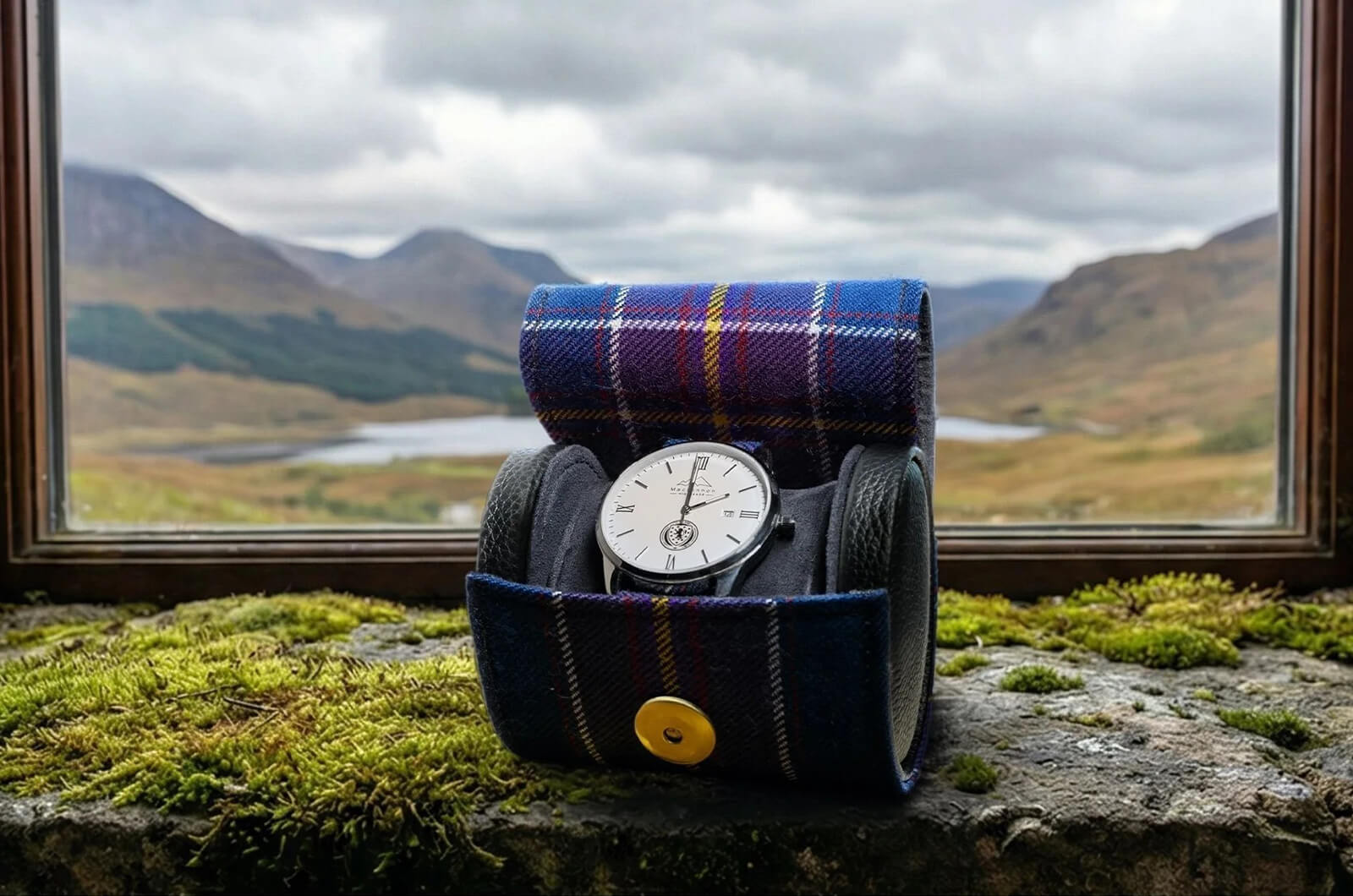
We work directly with Scottish mills to source authentic tartan for our watches, which means every strap we make carries something of that same tradition. When you're standing in front of Castle Fraser or walking the grounds at Brodick, it's the kind of thing that feels worth having on your wrist. If you want to take something meaningful home from Scotland, the National Trust for Scotland's watch collection also stocks a small selection of Scottish watches, including a few exclusive MacKinnon pieces tied to specific heritage themes.
Planning Your Visit
For most people, a single castle per day is plenty — the larger properties have grounds that could take a full afternoon on their own. If you're focusing on Aberdeenshire, the Castle Trail is well-signposted and gives a logical route between Craigievar, Castle Fraser, Drum, and Fyvie among others.
NTS membership covers free entry to all these properties and pays for itself quickly if you're visiting more than a couple. Day tickets are available for individual properties if you'd rather not commit upfront.
If you're visiting from abroad, generally speaking the summer months are easiest for access, but some of the castles are particularly atmospheric in autumn when the surrounding woodland turns. Spring at Brodie, for the daffodils, is another thing entirely.
And if you're looking for a meaningful gift to bring back — for a wedding, a retirement, or just someone who cares about their Scottish roots — our custom tartan watches with authentic Scottish tartan are designed for exactly those occasions.
Find Your Clan, Wear Your Story
Scotland's castles are living records of the families and communities that shaped this country. Whether you're visiting for the history, the landscapes, the architecture, or the sense of personal connection, the NTS does more than most to make these places genuinely accessible and genuinely meaningful.
At MacKinnon Watches, that same belief in heritage and craftsmanship is baked into everything we make. If you'd like to learn more about our story, our collections, or a custom piece for a special occasion, we'd love to hear from you.
Get in touch with the MacKinnon Watches team here.
Frequently Asked Questions
What castles does the National Trust for Scotland look after?
The NTS cares for a significant number of Scotland's historic castles, including Craigievar Castle, Culzean Castle, Castle Fraser, Fyvie Castle, Brodick Castle, Brodie Castle, Kellie Castle, Drum Castle, and Falkland Palace, among others. A full list is available on the NTS website.
Is entry to National Trust for Scotland castles free?
Entry is free for NTS members. Day tickets are available for non-members at individual properties. Membership is available from approximately £5.90 per month, which tends to pay for itself after two or three visits.
Which NTS castle is best for families?
Brodick Castle on the Isle of Arran is widely regarded as a strong family option, with its grounds, wildlife, and reconstructed Bronze Age roundhouse. Brodie Castle also has a dedicated Playful Garden for children. Castle Fraser offers waymarked trails through parkland with opportunities to spot red squirrels and deer.
What is the Aberdeenshire Castle Trail?
The Aberdeenshire Castle Trail is Scotland's only dedicated castle trail, covering 14 distinctive fortresses across the region. It includes several NTS properties such as Craigievar, Castle Fraser, Drum Castle, and Fyvie Castle, as well as other historic sites. It's particularly well-suited to visitors who want to see multiple castles over a few days.
Which Scottish castle inspired Disney's Cinderella?
The rumour most often cited is that Craigievar Castle in Aberdeenshire, with its distinctive pink walls and fairytale profile, served as an inspiration for Disney's Cinderella castle. Whether Disney officially confirmed this is debated, but the resemblance is hard to argue with.
Can I buy Scottish heritage watches connected to NTS properties?
Yes. The National Trust for Scotland's online shop stocks a small selection of watches, including exclusive MacKinnon Watches pieces tied to specific NTS heritage themes such as the Spirit of Culloden and Pink Castle tartans.
What tartan should I wear to a Scottish castle?
If your family has a clan tartan, that's the natural choice. If you're unsure which tartan is associated with your name, most clan societies maintain searchable registers. Our tartan finder tool can also help narrow it down if you're considering a tartan watch or strap to mark a visit to Scotland.

Written by Matthew Murphy





Leave a comment
This site is protected by hCaptcha and the hCaptcha Privacy Policy and Terms of Service apply.